 ×
×
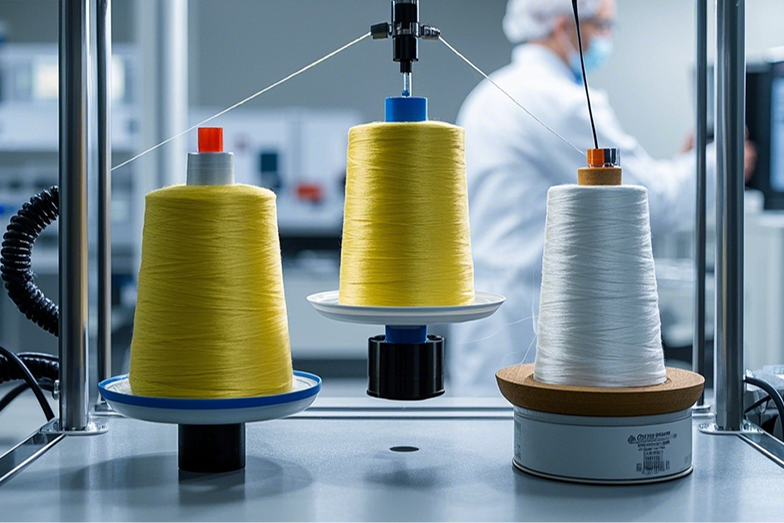
Direct answer: Meta-aramid (e.g. Nomex, Conex) is engineered for heat and flame resistance — it chars without melting and insulates against thermal hazards. Para-aramid (e.g. Kevlar, Twaron) is engineered for tensile strength, cut and abrasion resistance — roughly 5x stronger than steel by weight. For fire and heat, choose meta-aramid; for cuts, impact and structural loads, choose para-aramid; most premium PPE blends both, like IIIA fabric.
The Short Answer
Both are aromatic polyamides (aramids), but the position of the amide bonds changes everything: meta-aramid (Aramid 1313) bonds at the 1,3 position, para-aramid (Aramid 1414) at the 1,4 position.
Meta-aramid forms a zigzag, flexible molecular chain with lower crystallinity — optimized for thermal stability and flame resistance.
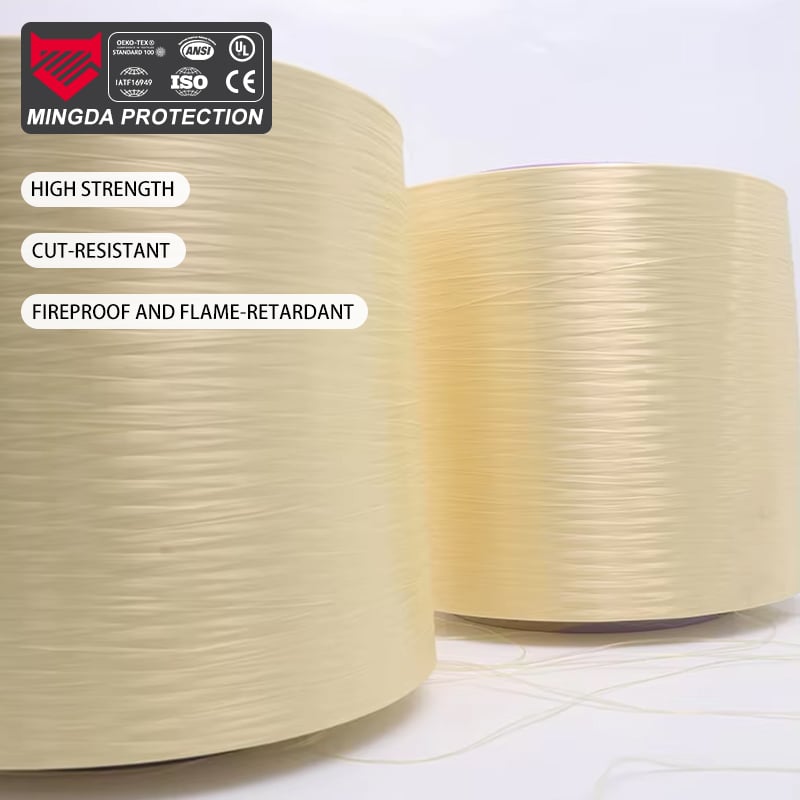
Para-aramid forms a rigid, rod-like chain with extremely high crystallinity — optimized for tensile strength, high modulus and cut resistance.
Numbers: meta-aramid tenacity is roughly 5–6 g/den; para-aramid reaches 20–23 g/den. In PPE terms: meta = the thermal barrier, para = the reinforcement layer.
Real-world PPE usually needs both — that is why premium blends like Nomex IIIA (93% meta + 5% para + 2% antistatic) exist.
Performance Comparison at a Glance
|
Property |
Meta-Aramid (1313) |
Para-Aramid (1414) |
|
Core advantage |
Heat & flame resistance, thermal insulation |
Tensile strength, cut & abrasion resistance |
|
Tenacity |
~5–6 g/den |
~20–23 g/den |
|
Elongation at break |
~20–30% (flexible) |
~3–4% (rigid) |
|
Long-term use temp. |
~250°C |
~180°C (strength retention) |
|
Decomposition temp. |
>370°C |
>450°C |
|
Flame behavior |
Inherently FR, chars without melting or dripping |
Does not melt; decomposes at high temperature |
|
Density |
~1.38 g/cm³ |
~1.44 g/cm³ |
|
UV resistance |
Weak — not for prolonged outdoor use |
Very weak — photodegrades; needs UV protection |
|
Dyeability |
Difficult (high-temp / high-pressure dyeing) |
Extremely difficult (solution-dyed only) |
|
Typical role in PPE |
Thermal barrier layer |
Reinforcement & durability layer |
Sources: DuPont and Teijin fiber datasheets; industry technical guides (Tyndale, MCR Safety, TenCate); published aramid fiber literature.
When to Choose Meta-Aramid
Choose meta-aramid when your primary hazard is thermal:
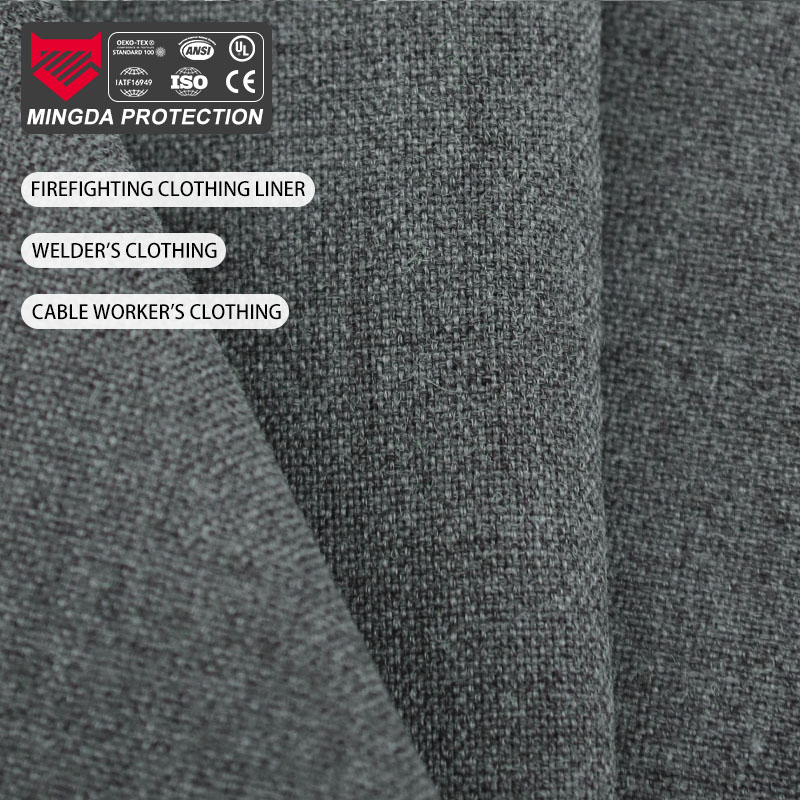
Firefighter turnout gear — the outer shell demands sustained flame resistance and thermal insulation.
Arc flash protective clothing — meta-aramid resists the intense thermal energy of electrical arcs without melting.
Industrial FR workwear — foundries, steel mills, aluminum smelters and glass plants where radiant heat is the daily hazard.
High-temperature filtration fabrics — filter bags in cement and asphalt plants.
Electrical insulation — insulation paper and sleeves for motors, transformers and generators.
Automotive & aerospace interiors — seat fabrics and carpets requiring low smoke, low toxicity and inherent FR.
When to Choose Para-Aramid
Choose para-aramid when your primary hazard is mechanical:
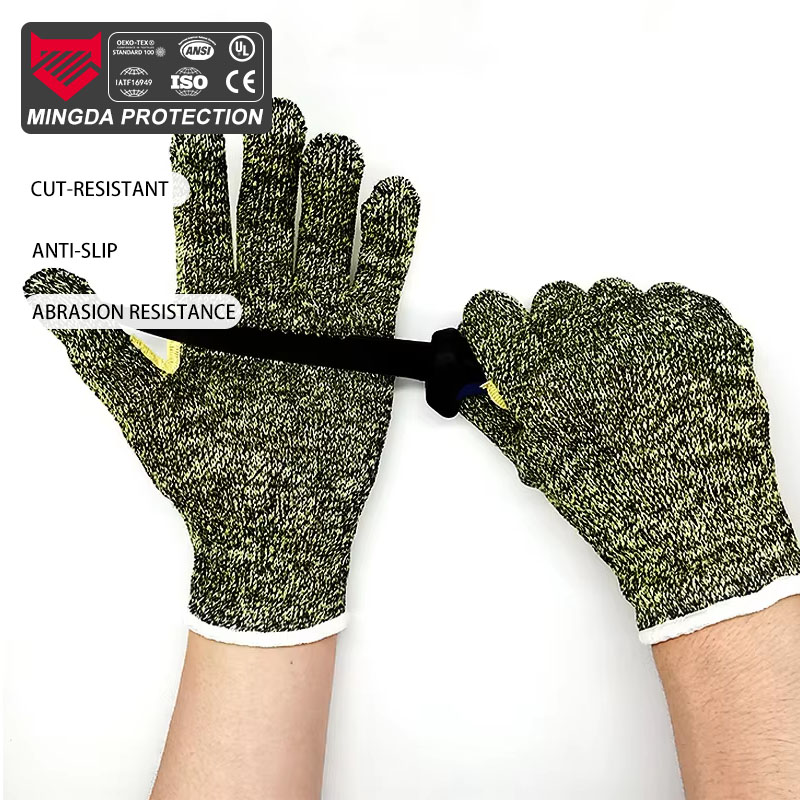
Cut-resistant gloves & sleeves — para-aramid knit or woven fabrics deliver reliable cut protection for glass handling, metal fabrication and assembly lines.
Ballistic protection — body armor, ballistic helmets and stab-resistant vests rely on para-aramid's strength-to-weight ratio.
Composite reinforcement — tire cords, rubber hoses, fiber optic cables, boat hulls and aircraft honeycomb structures.
High-strength ropes & cords — braided para-aramid ropes for marine, industrial rigging and rescue operations.
PPE reinforcement layers — added to meta-aramid garments to boost tear and abrasion resistance in high-wear zones.
Why Most Premium PPE Uses Both
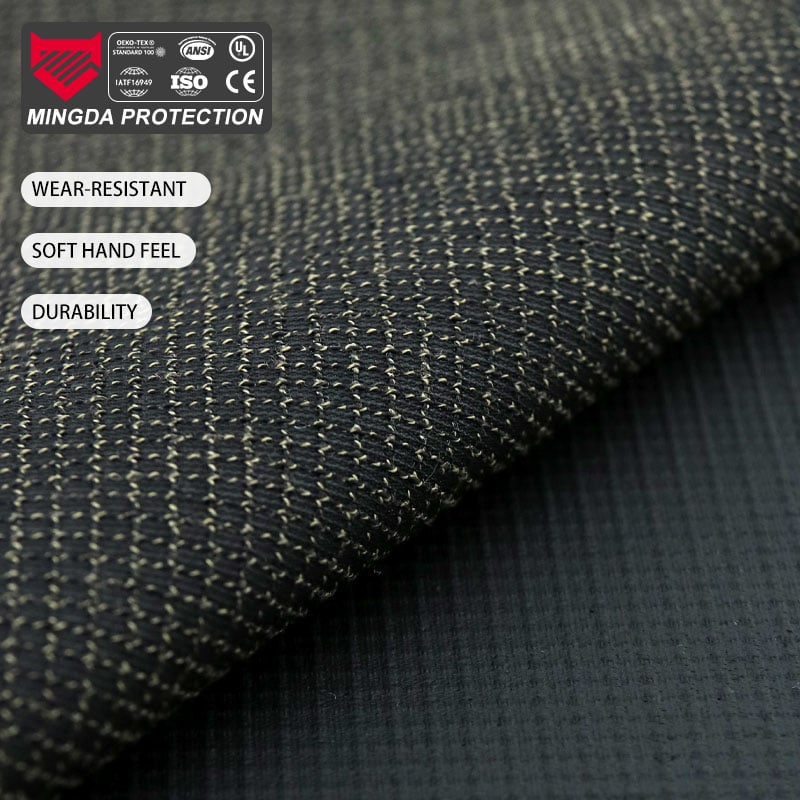
The most effective protective garments rarely use one aramid type alone — real workplaces expose workers to thermal AND mechanical hazards simultaneously. A foundry worker faces radiant heat AND abrasive surfaces; a firefighter deals with flames AND physical wear. The gold standard is a blended approach: the outer layer (often para-aramid dominant) handles mechanical wear, while the inner layer (meta-aramid dominant) handles thermal insulation. A classic example is Nomex IIIA fabric, which combines meta-aramid for flame resistance, para-aramid for tear and abrasion strength, and antistatic fibers for electrostatic discharge control.
Quick Decision Guide
|
If your priority is... |
Choose... |
|
Flame resistance & thermal protection |
Meta-Aramid (1313) |
|
Cut resistance & abrasion resistance |
Para-Aramid (1414) |
|
Long-duration heat exposure (>200°C) |
Meta-Aramid (1313) |
|
High tensile strength & modulus |
Para-Aramid (1414) |
|
Electrical insulation |
Meta-Aramid (1313) |
|
Ballistic & impact protection |
Para-Aramid (1414) |
|
Both thermal + mechanical protection |
Blended Meta + Para-Aramid |
The bottom line: neither aramid is universally better. If your worker faces fire, heat and arc flash — start with meta-aramid. If they face cuts, abrasion and structural loads — start with para-aramid. If they face both, choose a blended fabric.
Frequently Asked Questions
Q1: Is Kevlar flame resistant?
Kevlar is para-aramid: it does not melt or ignite easily and decomposes only above ~450°C, so it survives brief flame exposure. But it is not the FR workhorse of protective clothing — meta-aramid provides the sustained thermal barrier, which is why FR garments use meta-aramid for the heat layer and para-aramid for mechanical reinforcement.
Q2: What is the difference between Nomex and Kevlar?
Nomex is a meta-aramid built for heat and flame resistance; Kevlar is a para-aramid built for strength and cut resistance. In a protective garment, Nomex-type fiber protects against heat while Kevlar-type fiber adds tear, abrasion and cut strength — many premium fabrics blend both.
Q3: What is IIIA fabric?
IIIA is the classic aramid blend used in premium FR workwear: approximately 93% meta-aramid, 5% para-aramid and 2% antistatic fiber. The meta-aramid provides flame and thermal protection, the para-aramid adds durability, and the antistatic fiber controls static discharge — a balance used in garments certified to NFPA 2112 and EN ISO 11612.
Q4: Which aramid is used for cut-resistant gloves?
Para-aramid. Its high tenacity (20–23 g/den) and high modulus make it the standard aramid for cut-resistant knit and woven glove fabrics, typically rated under EN 388 or ANSI/ISEA 105. Cut-resistant gloves are often para-aramid alone or blended with steel fiber, glass fiber or UHMWPE.
About Shantou Mingda Textile Co., Ltd
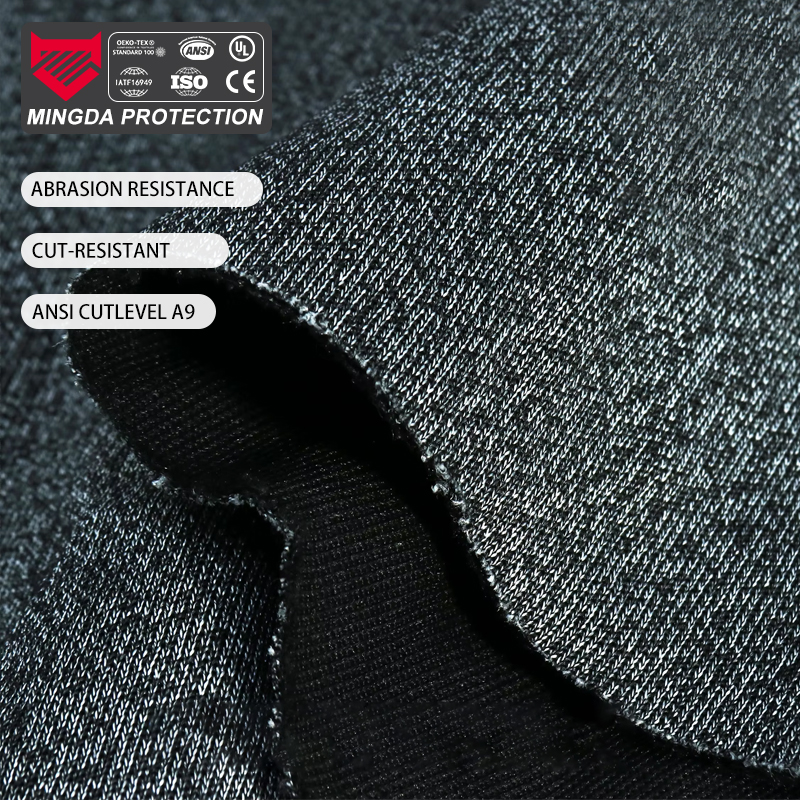
With 40 years of technical heritage and 30,000 m² of vertically integrated spinning and knitting capacity, Mingda produces both meta-aramid and para-aramid yarns and fabrics — including custom blends such as the PPAN-300-20 aramid blend fabric and matching meta-aramid FR sewing threads. We support make-to-order development with free samples and small trial orders, and we provide test documentation oriented to EN ISO 11612 / NFPA 2112 for global PPE brands.
Need help selecting the right aramid for your application? Contact us for technical consultation, free samples and competitive pricing.

 EN
EN



 Hot News