 ×
×
If you have ever worn or sourced flame-resistant (FR) workwear, you already know the most common complaint by heart: “it is hot.” Welders, electricians and plant workers across the world ask the same question — is aramid fabric breathable, and why does protective clothing feel like a sauna? The honest answer is that the discomfort is not a single material's fault. It is the combined result of fiber moisture behavior, fabric construction, fabric weight and the safety standards the garment must meet. Understanding these four factors will help you buy (or design) FR clothing that protects without cooking the wearer.
Aramid fabric can be breathable — but the typical heavy FR coverall is not, and here is why. Comfort in protective clothing is driven mostly by two things: how well the fiber moves moisture away from the skin (moisture regain), and how much air the fabric lets through (air permeability). Aramid fibers have a moderate-to-low moisture regain, and FR garments are usually woven densely and made heavy enough to pass flammability tests. The result: trapped heat and sweat.
The good news is that this can be engineered around. Blending aramid with high-moisture fibers such as FR viscose, using lighter constructions such as ripstop or knit, and choosing the right weave for the job can dramatically improve breathability — without giving up certification.
Four factors work together to make most FR garments feel hot:
None of these are “mistakes” by the supplier. They are engineering trade-offs — and they can be re-balanced.
Moisture regain is the most useful single number for comparing fiber comfort. These are typical values at standard atmosphere (65% relative humidity, 20–21°C):
|
Fiber |
Moisture regain |
Comfort perception |
Typical FR use |
|
Meta-aramid (Nomex®-type) |
~4–5% |
Moderate |
FR workwear, firefighting gear |
|
Para-aramid (Kevlar®-type) |
~3–4% |
Low–moderate |
Cut/thermal-resistant blends, gloves |
|
Modacrylic |
~1.5–2% |
Low–moderate |
FR workwear blends, high-vis FR |
|
FR viscose (FR rayon) |
~11–13% |
High |
FR blends, summer FR wear |
|
Cotton (FR-treated) |
~7–8% |
High |
Treated FR workwear |
|
Polyester |
~0.4% |
Very low |
Not suitable for FR (melts) |
Two takeaways from this table. First, aramid alone is not the most comfortable fiber, but it is also not the worst — the bigger culprit is usually the dense, heavy construction around it. Second, the most breathable FR garments are almost always blends, pairing aramid or modacrylic with a high-regain fiber so the fabric can move moisture.
The same fiber can feel completely different depending on how it is built. This is where smart sourcing pays off:
|
Construction |
Air permeability |
Pros |
Typical FR use |
|
Plain weave |
Lowest |
Dense, abrasion-resistant, stable |
Heavy-duty FR workwear |
|
Twill weave |
Moderate |
Balanced comfort and durability |
Standard FR coveralls (most common) |
|
Ripstop |
Moderate–high |
Lightweight with high tear strength |
Lightweight FR jackets, summer FR wear |
|
Knit |
Highest |
Stretchy, breathable, soft |
FR base layers, hoods, balaclavas |
Beyond the weave, three numbers matter when you compare quotes:
This is the most important section for buyers. The most comfortable certified FR fabrics are built from the yarn up — and that is exactly why buying from a supplier who spins their own yarn (vertical integration) is an advantage.
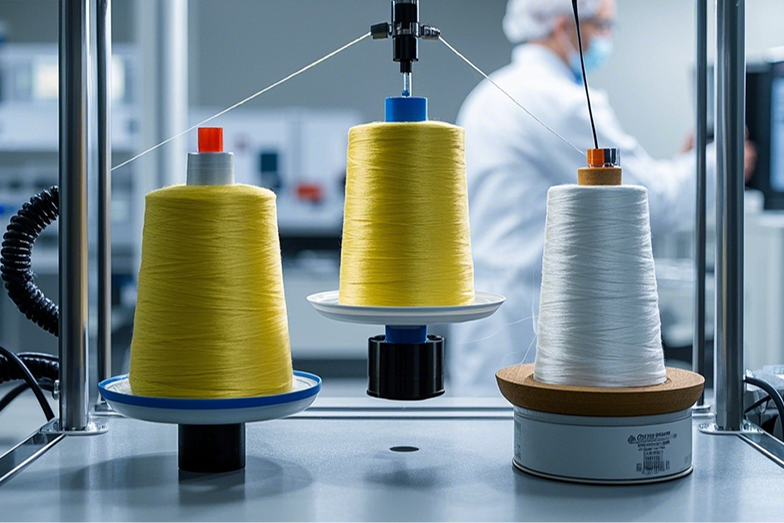
At Mingda Textile, this is our core business: we spin the yarn, engineer the blend ratio, and weave or knit the fabric in one facility — so a buyer can order a custom moisture-regain profile, not just a standard stock item.
Q1: Is aramid fabric breathable enough for hot climates?
Yes, when engineered correctly. Choose a light-weight (6–7.5 oz/yd²) twill or ripstop construction and a blend with high-regain fibers such as FR viscose. Pure heavy aramid fabrics are not the right starting point for tropical summer wear.
Q2: Does blending aramid with modacrylic improve comfort?
It improves hand feel, drape and color, and reduces cost — but for maximum moisture comfort, a blend with FR viscose (or a tri-blend) performs better, because FR viscose has much higher moisture regain.
Q3: Will a lightweight FR fabric still pass NFPA 2112 or EN ISO 11612?
It can. Certification depends on the complete fabric system — fiber, construction, weight and finish — not weight alone. Always request the actual test report for the exact fabric you are buying.
Q4: Can I get a breathable FR fabric for summer workwear?
Yes. Look for light-weight ripstop or twill fabrics in aramid/modacrylic/FR viscose blends, and verify air permeability and moisture-management data with the supplier. Mingda Textile produces such fabrics and can tailor the blend to your climate.
“Is aramid fabric breathable?” is really the wrong question. The right question is: “which aramid-based fabric is breathable enough for my workers and my climate?” Breathability is a design decision — set by fiber blend, yarn, weave and weight — and it does not have to be sacrificed for flame protection. The best FR programs treat comfort as a safety issue too, because workers who are overheated are more likely to take the garment off.
Mingda Textile specializes in inherently flame-resistant yarns and fabrics — meta-aramid, para-aramid and modacrylic — with custom blend ratios, light-weight and knit constructions, and both woven and knitted options, backed by 40 years of textile expertise. We spin, weave and knit in one facility, so we can engineer breathability into your FR fabric from the yarn up. Contact us for free sample swatches, spec sheets with air permeability data and technical guidance before you finalize your specification.

 EN
EN



 Hot News