
 EN
EN


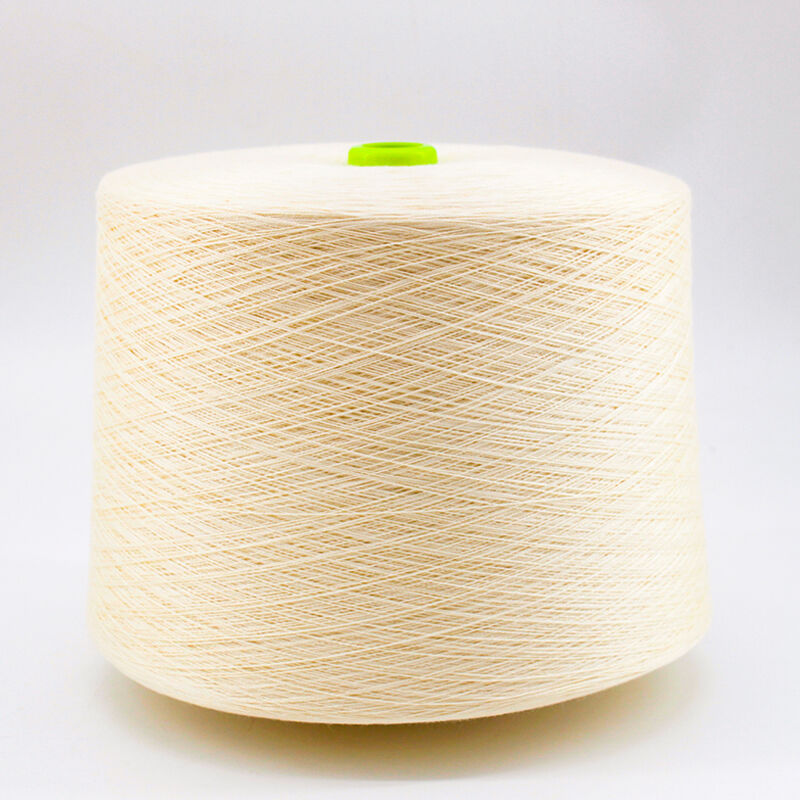
Inherent Flame Resistance: How Modacrylic Yarn Delivers Reliable, Durable Protection
Gas-phase flame inhibition mechanism unique to modacrylic fibers
What makes modacrylic yarn so resistant to flames? It has this built-in protection thanks to how its polymer works chemically. When exposed to heat, the material actually gives off substances that stop fires from spreading. These special chemicals grab onto those pesky free radicals floating around in the air, basically messing up the fire reaction before it can get going. At the same time, the fabric forms a protective layer instead of melting away or dripping down like other materials might do. Once the flame goes out, the yarn stops burning on its own pretty quickly, usually within just a few seconds. This kind of fire safety isn't added later through coatings or treatments either it comes straight from the way the molecules are arranged in the material itself, which is why manufacturers love using it for things where safety matters most.
Superior LOI (28–30%) vs. cotton (18%) and polyester (20%) — no afterflame or melt-drip
Modacrylic has a Limiting Oxygen Index around 28 to 30 percent, which puts it way ahead of cotton at just 18% LOI and polyester at 20% LOI when it comes to resisting catching fire and continuing to burn in normal air conditions. What really stands out is that modacrylic stops burning immediately once the flame goes away and doesn't drip molten material either something most synthetic fabrics struggle with. These two properties work together to stop additional injuries from spreading flames and contain fires better than other materials. That's why this fabric finds so much use in places where workers face real fire hazards every day.
UL 94 V-0 and ASTM D6413 compliance without chemical finishes or topical FR treatments
Modacrylic yarn naturally satisfies both UL 94 V-0 and ASTM D6413 vertical flame tests, which means it gets top marks for flame resistance right out of the box without needing any special coatings or chemicals applied after manufacturing. The material typically shows less than two seconds of afterflame when tested, and still passes all requirements even after going through fifty rounds of industrial washing according to AATCC 135 standards. What makes modacrylic stand out is its stable molecular structure that keeps performing well over time in tough environments like petrochemical plants. Unlike other materials that rely on surface treatments that eventually break down, modacrylic remains reliable because its fire resistant properties are built into the fiber itself from start to finish.
Chemical and Thermal Resilience: Modacrylic Yarn in Harsh Petrochemical Service Conditions
Resistance to hydrocarbons, aromatic solvents, and pH extremes per ASTM F1358 and ISO 13997
Modacrylic yarn stands up remarkably well against hydrocarbon spills and those nasty aromatic solvents we all know too well like benzene and xylene. It also handles extreme pH levels from around 2 to 12 without breaking down. These properties have been confirmed through rigorous testing standards including ASTM F1358 and ISO 13997. Most synthetic materials tend to swell, get soft, or just plain fall apart when they meet aggressive chemicals head on. But modacrylic keeps its shape and continues to provide protection even after being exposed for long periods. For workers in refineries wearing coveralls, technicians doing pipeline maintenance, anyone needing protective equipment regularly comes into contact with corrosive substances day in and day out, this kind of durability makes all the difference between safety and serious risk.
Long-term durability: >95% tensile strength retention after 50 industrial launderings (AATCC 135)
The polymer structure of modacrylic makes it much more resistant to issues like fibrillation, pilling, and general wear compared to flame-resistant treated cotton fabrics. Cotton tends to lose around 15 to 30 percent of its tensile strength after only about 20 industrial washes according to industry standards. When tested under AATCC 135 conditions at 75 degrees Celsius using regular commercial detergents, modacrylic fabric keeps over 95% of its original strength even after going through 50 complete washing cycles. This kind of lasting performance means work garments last longer before needing replacement, which cuts down on costs for companies. Workers also benefit from maintaining proper thermal protection throughout their entire shift regardless of how many times the uniform gets laundered.
Performance-Optimized Blending: Enhancing Arc Flash and Static Control with Modacrylic Yarn
Strategic blending of modacrylic yarn with high-performance fibers creates fabrics that exceed industry safety benchmarks. A 60/40 modacrylic/aramid blend, for example, delivers optimal balance across critical parameters:
- Arc Thermal Performance Value (ATPV) meets NFPA 70E requirements for electrical arc flash protection
- Dimensional stability under thermal stress exceeds pure aramid fabrics by 15% (ASTM D1774)
- Cost efficiency improves by 30% versus full-aramid solutions—without compromising protection
Modacrylic/aramid blends (e.g., 60/40) for balanced ATPV, dimensional stability, and cost efficiency
The combination works because modacrylic creates that protective char when exposed to heat, while aramid fibers hold up under extreme temperatures over 500 degrees Celsius. We've found that mixing them at around 60% modacrylic to 40% aramid gives the best balance between keeping heat away and maintaining fabric strength. When things get really hot, the modacrylic basically creates this insulating barrier, and the aramid keeps everything from falling apart. Tests show these mixed fabrics keep their protective qualities above 95% even after being washed industrially fifty times. That's actually about 40 percentage points better than regular flame resistant cotton blends when looking at how well they hold up over time.
Antistatic integration: Preventing incendive sparks in Class I Division 1 hazardous locations
The low triboelectric charge generated by modacrylic makes it possible to integrate conductive yarns reliably into fabric, achieving surface resistivity under 10^9 ohms according to EN 1149 standards, all while keeping flame resistance intact. This property helps dissipate static electricity effectively in environments prone to explosions, like those found in petrochemical processing areas regulated by IEC 60079-32-1 guidelines. Traditional antistatic coatings tend to wear off after multiple washes, but fabrics made from modacrylic keep controlling electrostatic buildup consistently over time. That matters a lot when even small sparks can be dangerous since some ignition sources start at just 0.25 millijoules of energy.
FAQ Section
What is unique about modacrylic yarn's flame resistance?
Modacrylic yarn is unique in its flame resistance due to its gas-phase flame inhibition mechanism. When exposed to heat, it emits substances that block fire propagation by interfering with free radicals and forming a protective layer rather than melting.
How does modacrylic compare to cotton and polyester in terms of flame resistance?
Modacrylic surpasses cotton and polyester in flame resistance with a higher Limiting Oxygen Index (LOI) of 28–30%, while cotton and polyester have LOIs of 18% and 20% respectively. It also exhibits no afterflame or melt-drip.
Can modacrylic yarn retain these properties after washing?
Yes, modacrylic yarn maintains its flame-resistant properties and tensile strength, retaining over 95% of its original strength even after 50 industrial laundries, as confirmed by AATCC 135 standards.